Exterior · Service 02
Cleaned, prepped, sealed.
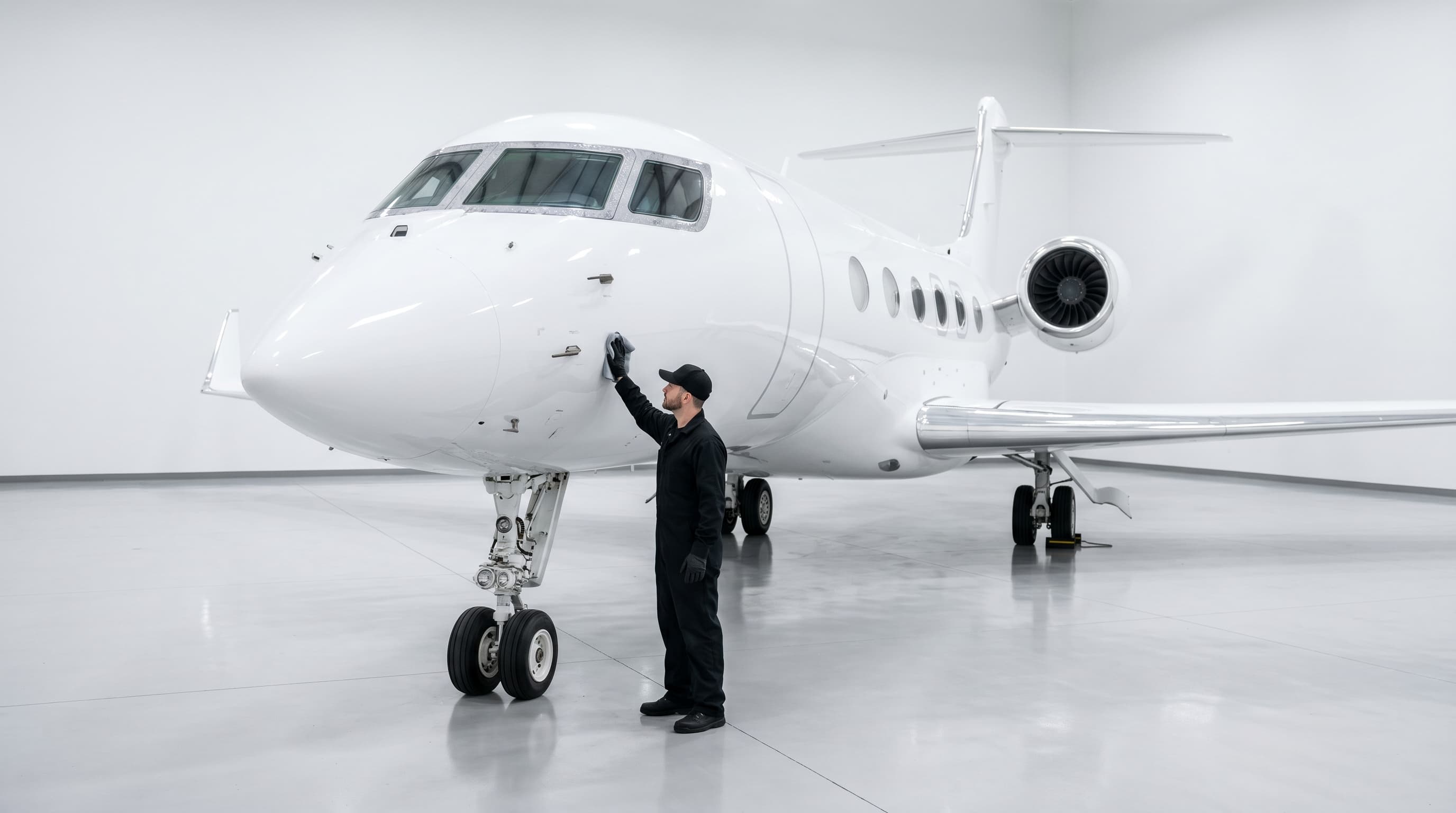
Full surface preparation before a protective coating goes on. Sensors, probes, and sensitive areas are masked and protected. Sealant or ceramic is applied evenly by hand. The aircraft leaves the hangar protected against the next round of UV, ramp soil, and weather.
Process
5 stages, executed on the airframe.
01
Pre-detail wash
Full clean before any coating goes on. A coating only locks in what's underneath — so what's underneath gets clean first.
02
Mask and protect
Sensors, probes, static wicks, and pitot tubes covered. Aviation-safe products only go where they belong.
03
Decontamination
Iron remover and clay-mitt pass to give the coating a clean surface to bond to. Embedded ramp fallout comes off here, not under the coating.
04
Coating application
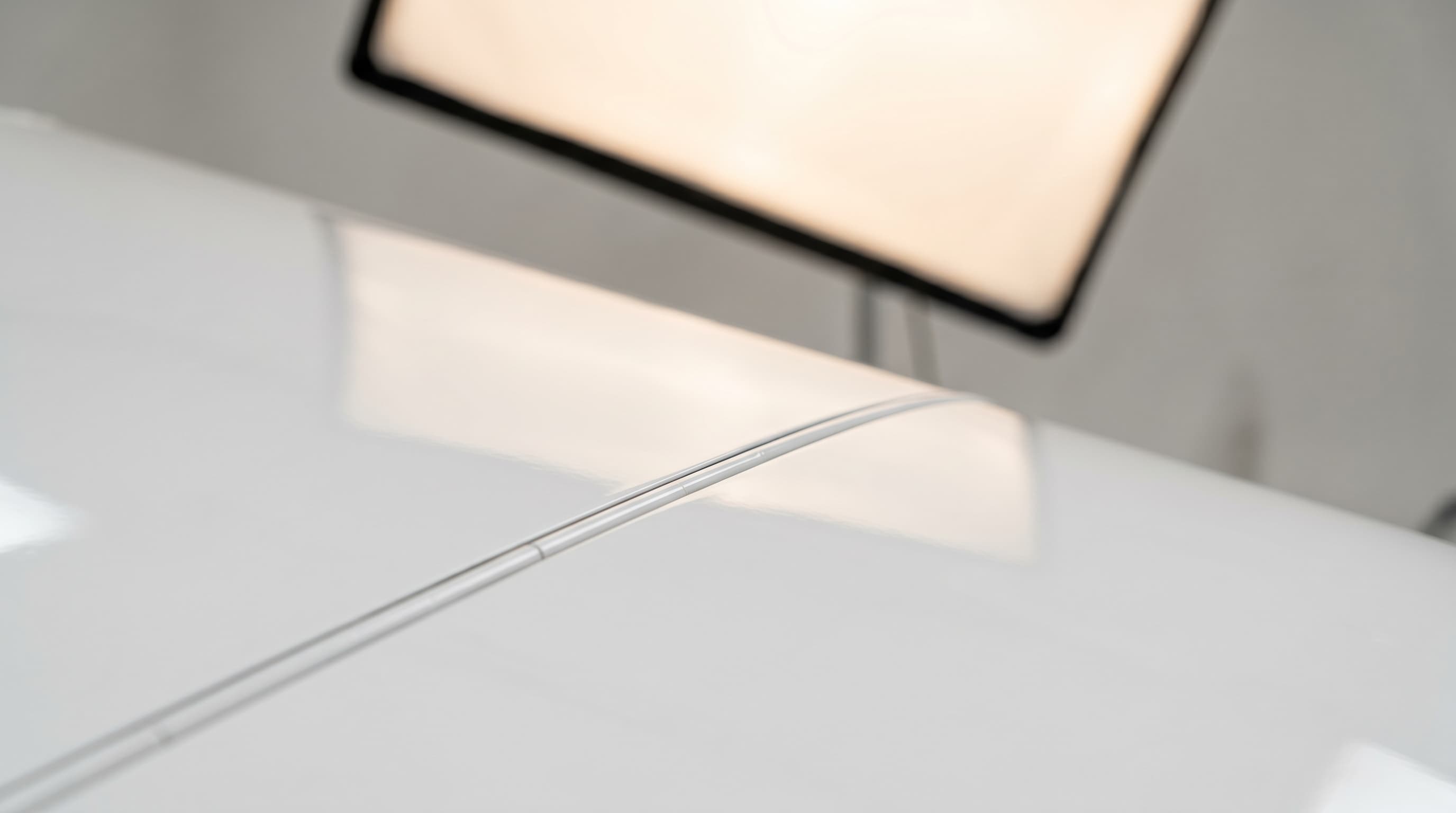
Applied by hand in 2×2 ft sections — even coverage, no missed strips. Sealant for medium-life protection, ceramic for multi-year (when the airframe permits).
05
Hand wipe-down
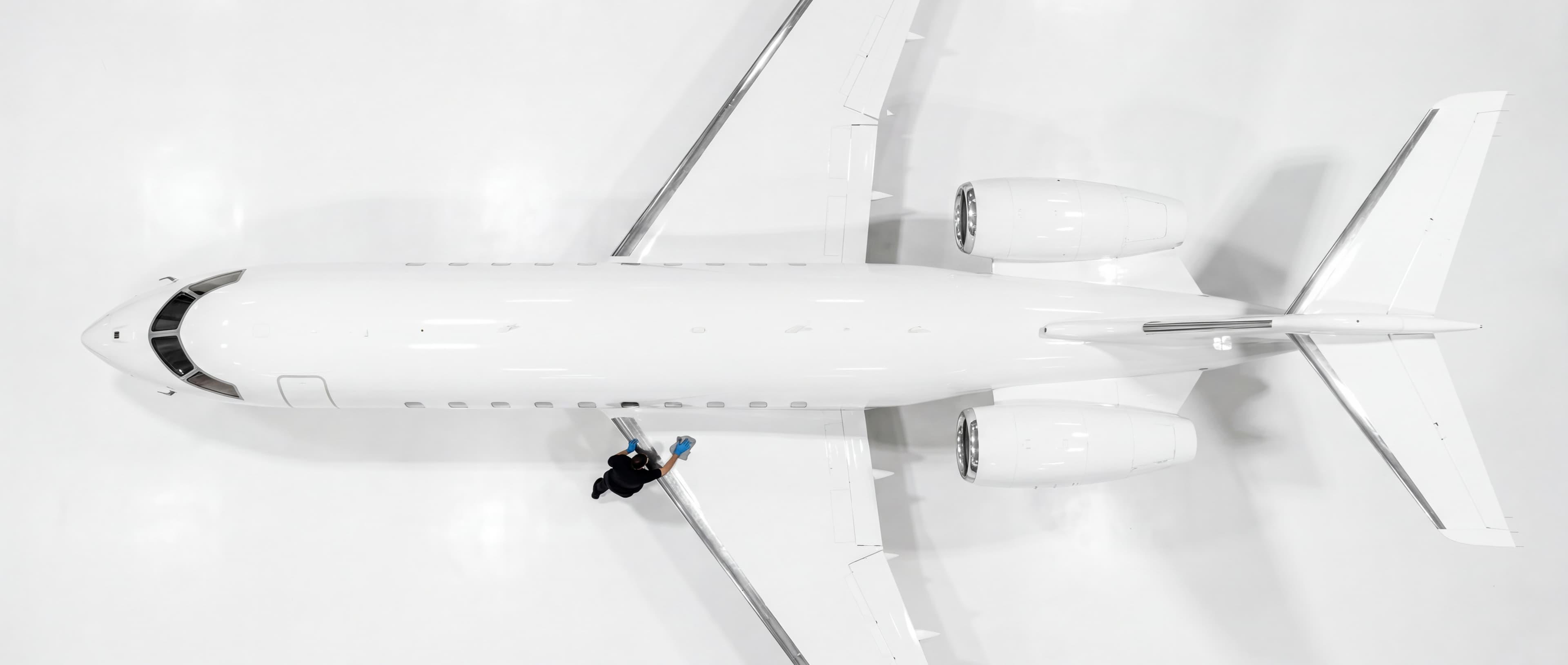
Final pass with low-pile microfiber leaves a spotless, residue-free finish.
Materials
Aviation-grade products, no shortcuts.
- Sealants
- Aero Cosmetics, Wolfgang Deep Gloss — synthetic, hydrophobic, long-life.
- Ceramics
- Gtechniq, CQuartz Pro — accredited installer products, when airframe permits.
- Protection
- 3M aviation masking, sensor plug sets.
- Final towels
- Low-pile suede microfiber — residue-free.
Time on aircraft
2–3 days
Mid-size completes in two days including decon, application, and cure. Heavy or ultra-long-range with extra prep time extends into the third.
Best for
- Post-wash protection
- Coastal-based aircraft fighting salt fog
- Pre-sale conditioning
- Reducing wash frequency between deep services
Request a quote